

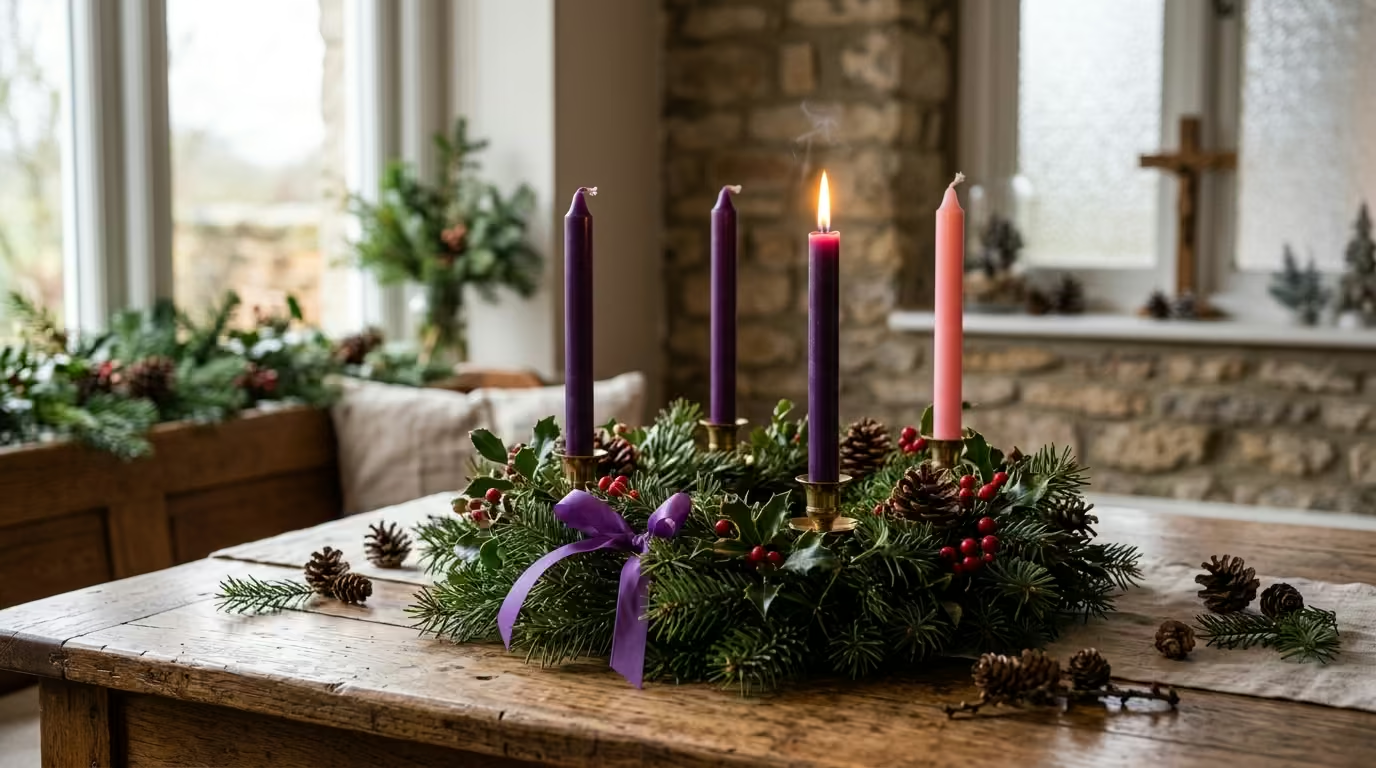
Every December the same quiet scene repeats: a green wreath with four candles, olive, rose, purple, and white, is set on tables and church altars across the world. Most people love the look but only vaguely know the meanings. One question hangs above it all: which candle gets lit this week, and why?
Advent candles are one of the oldest and richest candle traditions. They mark the four Sundays before Christmas, each candle carrying a theme and a colour. This guide explains the full tradition, the sizing that makes wreaths work, and the modern ways families keep it, so you can bring the practice home with meaning, not just decoration. The related Christmas candle scents guide gives more context on familiar festive fragrance families.
Where the Advent Candle Tradition Comes From
The word advent comes from the Latin adventus, meaning arrival or coming. The season is the four-week wait before Christmas, and the candles mark that waiting week by week. The tradition grew out of old Christian preparations and became the wreath-and-candles format families recognise today. For more on this, see our guide on Candle Safety at Home: A Room-by-Room Checklist for Every Candle.
The Four-Week Rhythm
Advent begins on the fourth Sunday before Christmas and runs through Christmas Eve. Each Sunday, another candle is lit, until all four burn together in the final week. The growing light is the whole point: the house gets brighter as the arrival gets closer.
Why a Wreath
The circular wreath symbolises eternity, an unending loop of time and hope, and evergreen branches stand for life in winter. Placing candles in a circle captures that symbol: endless greenery driving toward the single great day. The wreath’s shape is as meaningful as its candles.
The Four Advent Candles and Their Meanings
The candles carry a traditional colour scheme, though families adapt freely. The classic sequence uses three purple or blue candles, one rose candle, and often a central white candle for Christmas Day. Each colour signals a different week of the waiting season.
The First Candle: Hope
The first candle, usually purple or blue, is the candle of hope. It recalls the promise that something good is arriving. Lighting it on the first Sunday opens the whole waiting season, and the single flame in a dark room sets the mood better than any other moment.
The Second and Third Candles
The second candle, also purple, is the candle of peace, or of preparation in some traditions. The third candle is rose, laetare Sunday, standing for joy. That lighter colour breaks the purple and signals the near arrival. By week three the wreath is visibly filling with light.
The Fourth Candle and the Central Light
The fourth candle, purple, closes the waiting with love. In many homes a fifth white candle sits at the wreath’s centre and is lit on Christmas Eve or Christmas Day, the Christ candle, gifting the brightest light to the arrival itself. Not every wreath includes the centre candle, but families who use it love the finale.
Sizing Advent Candles for a Wreath
Wreath candles are usually straight-sided tapers or short pillars set into candle holders fixed to the wreath. The sizing matters because the wreath must stay balanced, safe, and lit for long stretches each week.
Choose a Dependable Burn Length
Each advent candle is lit for a short while on its Sunday, and increasingly through the week. A candle around 20cm tall with a proper burn life handles a month of weekly lighting without vanishing early. Compare burn times before buying so the fourth flame survives to Christmas.
Diameter and Holder Fit
Straight tapers of a similar diameter sit neatly in standard wreath candle holders. If your wreath arrives with metal prongs or spikes, choose candles with matching bases. Pillar-style advent candles balance the wreath differently and suit wider, flat wreath designs. Measure the holders before committing to a candle size.
Modern Ways to Keep the Advent Candle Tradition
The tradition has evolved far beyond a single wreath. Families now use advent calendars, candelabras, and simplified single-candle rituals, each keeping the same “light grows through December” idea. Choose the format that fits your home and your children.
- The classic wreath: Four candles in a circle with weekly lighting.
- The advent candelabrum: A single stand with a graduated, often central, flame plan.
- The countdown candle: Numbered days on one long candle, burned a little per evening.
- The family ritual: One candle lit nightly with a story or a Christmas thought.
- The minimalist strip: Four candles in a row that fill with light as December passes.
The Family Routine Variation
Many households light one advent candle at dinner on each Sunday, and never the full set. The ritual becomes a weekly pause rather than a daily chore, and children connect each candle to its theme. Keep it simple enough to survive December busyness, and the tradition will outlast the season.
Advent With Children
For children, the wreath is easiest when everyone has a job: one person lights, one tells the week’s theme, one sets the greens back after dinner. Keep the meanings short and age-appropriate, like “hope means waiting for something good”. The memory of the growing light stays with them for years.
Fire Safety With Advent Candles
Advent wreaths are made of dried evergreen, which is flammable, so placement discipline matters. A wreath of dry pine near a candle is exactly the kind of setup fire services warn about every year. Light the candles only when the room is supervised, and never leave a burning wreath alone.
Keep the Greens Damp and Clear
Spraying the wreath lightly with water between uses keeps the greens moist, which resists flame spread. Keep candles at least a handspan from the foliage and any hanging ribbon. If the wreath sits near the table edge, pull it safely back before lighting.
Blow Out Before Leaving
It sounds obvious, but the advent dinner drifts into the evening and the flame stays. Build a clear end to the lighting ritual, a blessing, a song, or a simple “blow out now” moment, so the wreath never burns unattended. Pair the ritual’s end with the physical act of extinguishing every flame. If you want to see the full range, our Christmas candles collection has plenty more like it.
Use Advent Candles With Care
Understand the Weekly Rhythm
Advent candle traditions often use four candles, with an additional candle in some settings. The exact colours and meanings can vary by church and family. The important point is the weekly rhythm, not one universal rule. The household should choose a stable wreath or tray, light only the planned candle, and keep the ceremony calm and supervised.
Choose a Clear Candle Colour
A red taper can bring a strong festive accent when the holder and wreath are neutral. A red metallic taper candle works well as a decorative reference for a traditional display. The candle should stand securely, remain away from dry foliage, and be extinguished before the room is left unattended.
Frequently Asked Questions
What are advent candles used for?
Advent candles mark the four Sundays before Christmas, one candle per week, to count down the waiting season. Each carries a theme, and the growing light symbolises the approach of Christmas. They are traditionally arranged in a wreath for weekly lighting.
What do the four advent candle colours mean?
Three purple or blue candles represent hope, peace, and love, while the rose candle in week three stands for joy. Some families add a white centre candle for Christmas itself. The colours are traditional guidance, and families adapt the meanings freely.
Do advent candles have to be in a wreath?
No. Wreaths are the classic format, but candelabras, candle strips, and single countdown candles all work. The essential part is the weekly rhythm of growing light. Choose the arrangement that fits your table and your daily routine.
How often do I light advent candles?
Traditionally once per Sunday, with each week’s flame joining the previous ones so the light grows. Many families light one candle nightly during the final week. Any rhythm that marks the countdown works, as long as the unlit candles always stay supervised.
How big should advent candles be?
Choose candles tall enough and sturdy enough to survive a month of weekly lighting, around 20cm with a decent burn time. Diameter should match your wreath’s holders. Check the burn life before buying so the fourth candle still stands strong in week four.
Can I use LED candles in an advent wreath?
Yes. LED candles are increasingly popular in advent wreaths, especially in homes with children or pets, because they carry no flame near the dry greenery. They give the same growing glow with far less risk and can run all day without supervision.
When do advent candles get lit?
The first is lit on the first Sunday of Advent, usually the fourth Sunday before Christmas. Each following Sunday adds a candle. The full set burns together in the last week, and the centre candle, if used, lights on Christmas Eve or Christmas Day.
Where can I find candles for an advent wreath?
The Christmas candles range at Christmas Candles UK includes straight tapers and pillar candles that suit wreath holders, with dependable burn times for a full month of weekly lighting. Choose four in your preferred palette and start the countdown properly.
Conclusion
Advent candles give December a weekly rhythm and a growing light that no other decoration matches. The four colours carry hope, peace, joy, and love, and the wreath wraps them in evergreen symbolism. Sizing depends on your holders and burn needs, while modern formats keep the tradition flexible for every family.
Light the first candle, say its meaning, and let the flame begin the wait. Explore the Christmas candles collection at Christmas Candles UK and build an advent ritual your family will remember long after December ends.