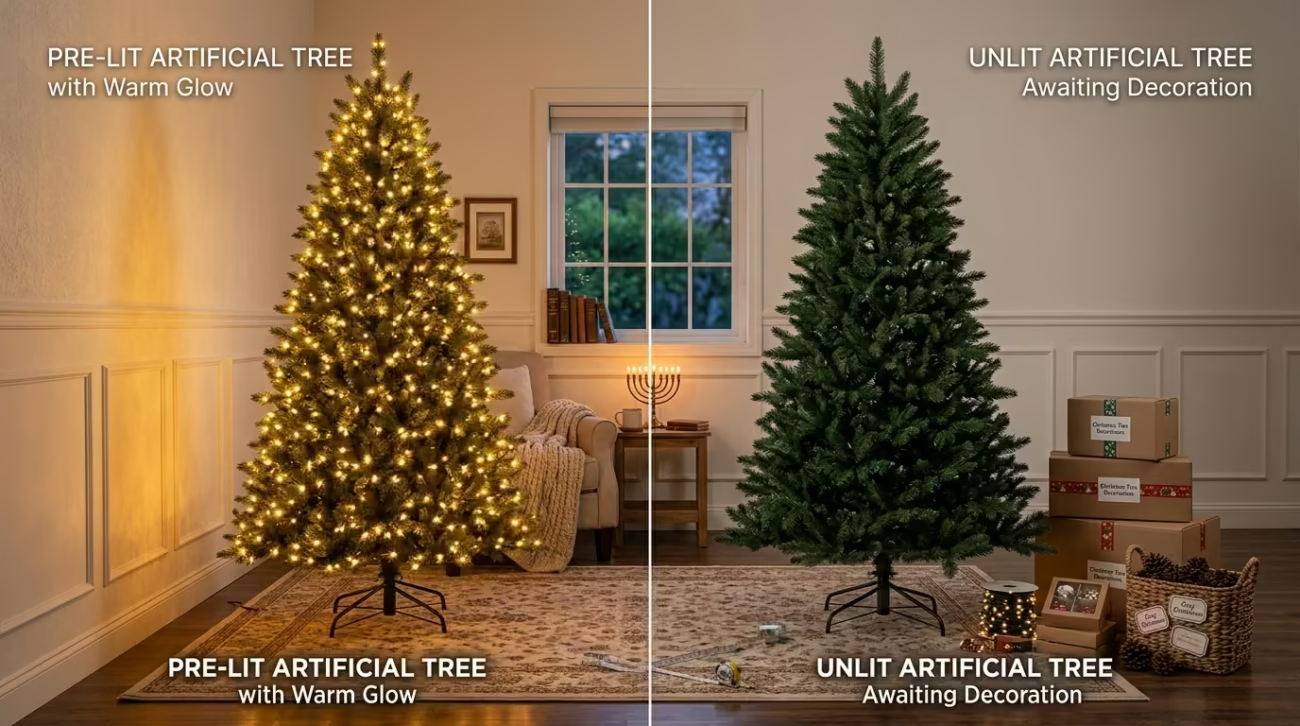

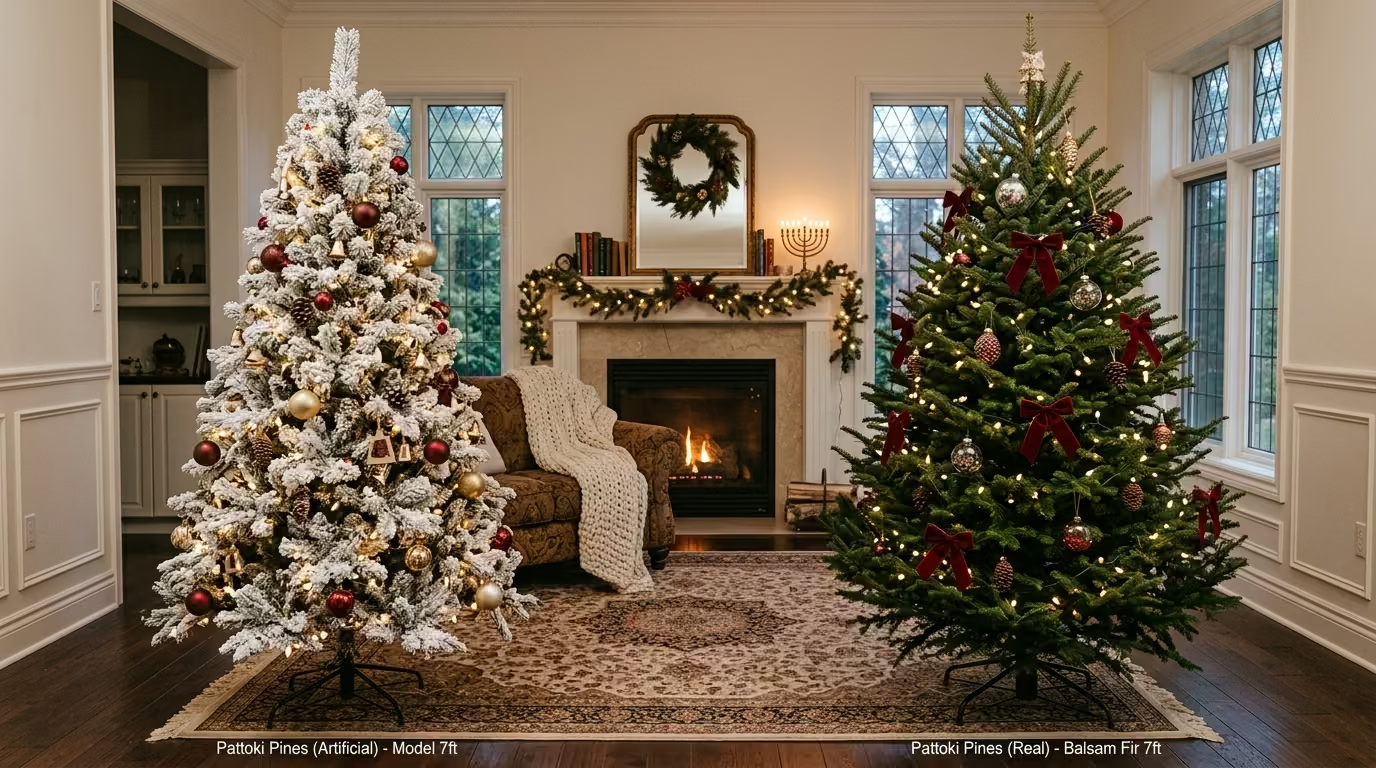
There are two iconic Christmas images: a snowy white-tipped tree standing elegantly in a bright room, and a deep green real tree filling the air with pine. Most households secretly want both. The budget and the calendar usually force a choice between them.
Flocked vs real Christmas trees is a comparison of three things: how they look, what they cost, and what upkeep they demand. Each side wins two of those three for different households. This guide lays out the honest trade so you pick the tree you will still love on Christmas Eve, not just the one that photographed well in November. The linked Christmas tree decorating order explains how to build an even display. Our guide on How to Choose a Christmas Tree Size That Fits Your Room covers this in more depth.
What a Flocked Christmas Tree Actually Is
A flocked tree is an artificial tree coated with a snow-like finish. The flocking, made from fibrous white material or glittering snow spray, clings to the branches to create that deep-winter, powder-dusted silhouette. Flocked trees read instantly as festive and photograph beautifully against dark walls.
The Look That People Mean by “Snowy”
Flocking transforms an ordinary evergreen profile into a snow-dusted centrepiece. Some flocked trees are fully white, while others keep green tips peeking under the frost. The look suits bright, minimal rooms where the tree becomes a sculpture. Many flocked designs at Christmas Candles UK use this soft, snowy finish for exactly that statement.
The Catch With the Finish
Flocking sheds. The snow coating can fleck off when you poke branches, hang heavy baubles, or store the tree badly. Handling needs to be gentle, and heavy ornaments should rest near the trunk. A well-cared flocked tree stays beautiful, but it will never be as scrub-proof as a plain green artificial tree.
What a Real Christmas Tree Costs and Gives
A real tree is the height of tradition. It brings a genuine evergreen scent, a natural silhouette, and the whole-family ritual of picking one from a lot. For many people, no artificial imitation replaces that smell, that feel, or that memory.
The Real-Tree Cost Picture
Real trees cost more than their purchase price. You buy the tree, then the stand, the water, the disposal fee, and often the needles you vacuum all January. Decent trees run anywhere from thirty to eighty pounds depending on size and season. The running cost repeats every single year.
The Real-Tree Upkeep Burden
Upkeep is the real tree’s biggest tax. It must be watered daily, kept away from radiators, and vacuumed beneath as needles drop. Dry trees fire risk climbs as the season wears on. The scent and tradition are the reward for that weekly maintenance routine.
Comparing Look, Cost, and Upkeep Side by Side
Put the two trees across three columns and the honest picture emerges. Neither wins everywhere. The right tree is the one whose advantages you value and whose downsides you can absorb.
- Look: Flocked = snowy, sculptural, photographic. Real = textured, fragrant, traditional.
- Upfront cost: Flocked costs more once but lasts years. Real costs less once and repeats annually.
- Upkeep: Flocked needs gentle handling and careful storage. Real needs daily water, needles, and disposal.
- Scent: Flocked offers none (add a reed). Real offers authentic pine fragrance.
- Longevity: Flocked lasts a decade plus. Real lasts a single season.
- Environment: Reused flocked beats a single-season real tree in some eyes. Real trees are renewable and compostable.
When Flocked Trees Win
Flocked trees win for households that want a consistent, photographic, zero-fuss Christmas every year. Busy families, flats, and anyone allergic to pine love them. Spread across a decade, a well-stored flocked tree costs less than ten real trees and never leaks a needle into the carpet.
When Real Trees Win
Real trees win for families who treat the tree as a living tradition. The scent, the trip to the lot, and the annual ritual are the point. If your December is built around the smell of pine and the kids measuring the tree’s growth, no white flocked tree replaces that. Budget also favours real for a single-year display.
Caring for a Flocked Tree So It Lasts
A flocked tree repays careful owners with a decade of snowy Christmases. The flocking is the valuable surface, so protect it. Handle branches from the base, hang ornaments rather than hooking heavy ones, and store the tree upright in a dedicated bag.
Ornament Advice for Flocked Branches
Choose lightweight baubles and place them where the decoration sits on the branch, not where it drags the snow off. Metal hooks can slice through flocking if prised hard. Pushing ornaments into the white tips rather than scraping them across the finish keeps the powder intact.
Storage That Preserves the Finish
Store a flocked tree in a tall tree bag, never crushed into a low box. Crushing is what rubs patches of flocking clean. Stand the bagged tree upright in a dry corner and the finish survives the off-season perfectly.
Managing a Real Tree Through the Season
A real tree’s perfect month depends on water and placement. Give it fresh water daily, cut a new slice off the trunk base before standing, and keep it away from radiators and fireplaces. A thirsty tree dries fast and drops needles in alarming quantities.
The Radiator Killer
Heat is the real tree’s enemy. A tree within a metre of a radiator dries the trunk, loosens the needles, and raises fire risk. Position the tree as far from heat as the room allows, ideally against an outer wall, which is also where a tree flame-safely belongs. Fire crews across the UK publish the same advice every December.
The Needle-Vacuum Reality
Real trees drop needles all season, and the amount rises in warm, dry rooms. Budget for a quick vacuum several times a week. If the floor is your expensive carpet and nobody wants the chore, that is exactly the moment to reconsider a flocked or plain artificial tree.
Compare Snowy and Fresh Looks
Think About Upkeep
A flocked tree gives an instant snowy appearance and does not shed needles in the same way as a fresh tree. A real tree brings natural scent, texture, and a different shape every year. The household should compare cleaning, storage, watering, and disposal before choosing. The right look is the one whose upkeep feels manageable through the full season. Our Christmas trees range is worth a look if you want to compare a few options first.
Choose the Style That Fits the Room
White branches brighten a dark corner, while green foliage can feel warmer beside wood and natural fabrics. A 60cm white artificial Christmas tree provides a clear reference for a snowy look in a compact room. The decorator should still leave space for a stable base, safe lighting, and easy movement around the tree.
Frequently Asked Questions
Are flocked Christmas trees expensive?
A good flocked tree costs more upfront than a plain green artificial one because the flocking process adds material and labour. Spread over many years of reuse, the cost per Christmas becomes small, and there is no annual disposal charge.
Do real Christmas trees cost more in the long run?
Yes. Real trees repeat their full cost, from purchase to disposal, every single year. A flocked tree paid for once and stored well beats ten real-tree seasons on total cost. Only a single-season mindset makes real trees cheaper.
Why is my flocked tree shedding white pieces?
Flocking sheds naturally when branches are poked, crushed, or dragged by heavy ornaments. Handle branches gently, hang light decorations, and store the tree upright in a bag. Some seasonal shedding is normal on cheaper flocked models.
Does a real tree smell better than a flocked tree?
A real tree provides authentic pine fragrance, while a flocked tree is scentless unless you add a room scent or a holiday reed diffuser. The smell is one of the strongest arguments for a real tree and the easiest thing to miss with an artificial one.
Is a flocked tree easier to care for than a real tree?
Much easier. A flocked tree needs no watering, drops no needles, and requires only gentle handling and upright storage. A real tree needs daily water, regular vacuuming, and seasonal disposal. Upkeep strongly favours flocked trees.
Can I buy a small flocked tree for a tabletop?
Yes. Tabletop flocked trees are a popular compact option, dusted with snow and sized for shelves, desks, and mantelpieces. Small flocked designs are affordable and add a frosty accent anywhere a full tree would not fit.
Do real trees catch fire faster than artificial ones?
A dry real tree can catch fire quickly once ignited, which is why watering and heat placement matter. Artificial trees are flame-retardant but not unburnable. Both need the same caution around heat and flames. Keep the tree clear of candles, fireplaces, and radiators whatever the material.
Where can I shop for both types?
The Christmas trees collection at Christmas Candles UK includes fluffy flocked miniatures and tabletop designs alongside artificial trees and tree skirts. If you want the snowy look with zero needles, the flocked range makes that easy to bring home.
Conclusion
Flocked vs real Christmas trees comes down to what your December values. Flocked trees win the look consistency, the lifetime cost, and the upkeep battle with their snowy, needle-free ease. Real trees win the romantic side: scent, tradition, and the annual ritual that no decoration can replace.
Choose the tree whose maintenance your household will actually enjoy doing. Browse the Christmas trees range at Christmas Candles UK, where flocked minis and snowy artificial styles bring December’s frost indoors without the needle-vacuum reality.